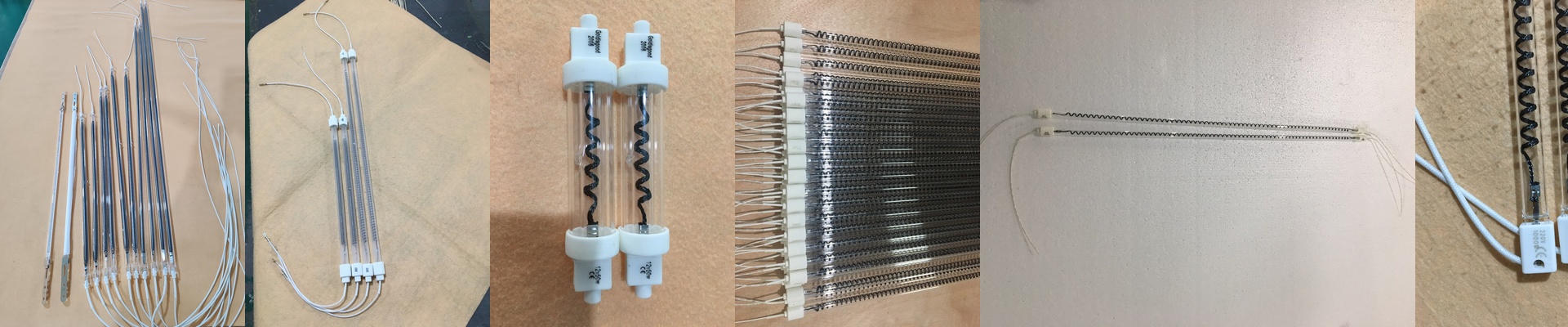
Getting Your IR Emitters Right for Different Brake Pads
Here’s the thing: you can’t just use the same infrared setup for every brake pad and expect it to work. It doesn’t happen. Ceramic pads and semi-metallic materials don’t drink up heat the same way. If your wavelength is off, you’re basically just throwing electricity at the wall and hoping for the best. Worse? You end up with uneven curing, which is a nightmare to fix. Picking the right wavelength Ceramic pads are picky. They need a specific IR band to get the heat deep inside without torching the surface. Then you’ve got semi-metallics—full of steel or copper—which react completely differently. We look at those absorption curves to decide if you need shortwave, medium-wave, or longwave. If you try to force a shortwave emitter on a material that doesn’t want it, you’ll get “surface glazing.” It looks finished on the outside, but the inside is still raw. You want that heat to sink deep into the matrix. The balancing act of power and heat We build these emitters to pack a lot of punch into a small space. High heat density is great because it speeds up your cycle, but it’s hard on your reflectors. I’ve seen people crank the wattage way too high to make up for poor absorption. Don’t do that. You’ll just burn out your filaments way faster than they should go. It’s all about balancing the voltage and wattage so the heat hits every inch of the pad evenly. The real-world trade-offs Let’s be honest: there’s no such thing as a “set it and forget it” emitter. High-output quartz lamps are amazing for rapid curing, but they’re fragile. One clumsy move during a line change and snap—there goes your tube. Plus, these high-density arrays put out a ton of ambient heat. If you skimp on the cooling fans or venting, your electronics will start to drift and eventually just quit on you. We always start with the physics of the material. Once we know how your specific ceramic or metallic mix handles heat, we tune the emitter to match. It’s the only way to avoid surface cracks and those dreaded under-cured cores.